
Choose All-Season Tires for Rain, All-Weather Tires for Snow
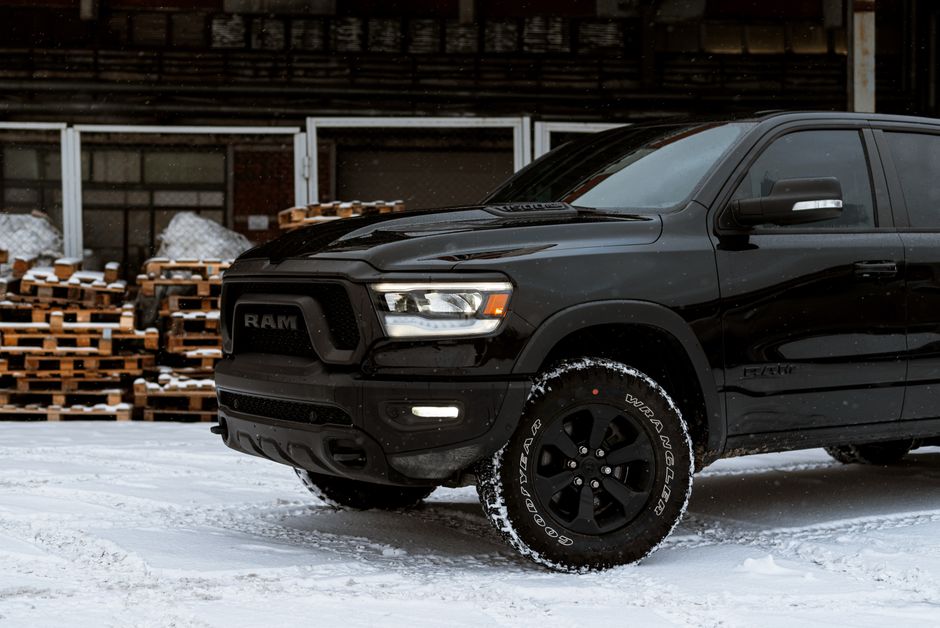
Choose a highly rated all-season tire if rain, dry roads, comfort, and long daily miles define your driving. Choose an all-weather tire with the Three-Peak Mountain Snowflake symbol if winter roads appear but seasonal tire swaps do not fit your life. Choose dedicated winter tires for deep snow. Then protect any choice with pressure checks, rotations, alignment, and enough tread.
A tire is not one score. It is a set of trade-offs.
Wet grip, snow grip, road noise, ride, rolling resistance, and tread life pull in different directions. The useful choice starts with the worst conditions you regularly drive through, not the label printed largest on the sidewall.
Are top-rated all-season tires safe enough for snow?
Top-rated all-season tires are safe enough for varied roads and some mud and snow, but they are not the right tool for deep snow. NHTSA TireWise states the dividing line plainly: “Winter tires are more effective than all-season tires in deep snow.”
That makes the decision simpler. If winter means occasional light snow and cleared roads, a well-tested all-season tire can fit an everyday car or SUV. If packed snow, ice, or deep snow is part of the routine, use winter tires. If you need one set to stay on the vehicle all year and still want a winter-traction standard on the sidewall, look at all-weather tires.
The sidewall tells part of the story. Match the tire size, load rating, and speed rating to the vehicle placard or owner's manual. NHTSA's UTQG label adds treadwear, wet-pavement traction, and temperature resistance. Traction grades run from AA through A, B, and C. A higher traction grade is useful context, not a full rain report.
Tread depth changes the result. NHTSA says to replace tires at 2/32 inch and check tread and pressure at least monthly. The margin narrows long before the cords show. In AAA tests, tires worn to 4/32 inch raised wet stopping distance by 42% on a Toyota Camry and 44% on a Ford F-150 compared with new tires.
What is the difference between all-season and all-weather tires?
All-season tires are built for varied road conditions with some mud-and-snow capability; all-weather tires are built for year-round use with winter-ready traction marked by the Three-Peak Mountain Snowflake symbol. The names sound close. The snow standard is the meaningful difference.
Consumer Reports says all-weather tires carry the mountain/snowflake sidewall symbol because they meet industry winter-traction standards. It also says these tires usually do not equal dedicated winter tires, though they can come close enough for many drivers who want to avoid seasonal removal.
There is no free category. All-season tires often suit the driver who spends more time on wet pavement and dry roads than in snow. All-weather tires suit the driver who needs one set to face all four seasons. Winter tires suit the driver whose hard condition is winter itself.
| Option | Who it suits | Cost | Key limitation |
|---|---|---|---|
| All-season tire | Drivers facing varied roads and some mud and snow | Not published | Winter tires are more effective in deep snow |
| All-weather tire | Drivers seeking year-round use with winter-ready traction and no seasonal removal | Not published | Typically does not match dedicated winter/snow tires |
| Dedicated winter tire | Drivers who face deep snow | Not published | Seasonal removal requirement is not published in the cited sources |
The current Consumer Reports all-weather group includes Michelin CrossClimate2, Bridgestone WeatherPeak, Firestone WeatherGrip, Nokian Remedy WRG5, Toyo Celsius II, and Vredestein Quatrac Pro+. Names are a starting point, not a verdict. The publication tests dry and wet performance, snow traction, ice braking, and other measures instead of relying only on UTQG or warranty language.
Which tires are best for wet roads without becoming noisy?
The best rain-focused tire is the one that performs well in wet braking, wet handling, and hydroplaning resistance while meeting your noise and ride needs. No single sidewall grade can answer all four questions.
Consumer Reports' wet-weather analysis evaluates those three wet measures together. That matters because it has measured nearly a 50-foot difference, about three car lengths, between the best and worst wet-braking models within a new-tire segment.
Read independent test results by tire size and vehicle category. Consumer Reports' test protocol uses ABS stops from 60 mph to zero on pavement with about 1 mm of water for wet braking. Its hydroplaning test measures the speed at which steering control is affected during a lateral path through 10 mm of water. Its tire work also measures ride, noise, rolling resistance, and tread life.
Noise belongs in the same decision, not in a separate wish list. AAA found that its higher-priced test sets did not perform significantly better than lower-priced sets in wet stopping, wet lateral acceleration, or noise-vibration-harshness tests. The price gap averaged $247.52 for the Camry sets and $203.80 for the F-150 sets. A high price is not a wet-road or quiet-ride guarantee.
Wear is the hidden variable. Consumer Reports found that a fresh tire and the same model worn to 4/32 inch can differ by 14 to 31 feet in wet stopping distance. The tire that feels fine in the driveway can tell a different story in standing water.
Frequently Asked Questions
Are expensive Michelin or Continental tires worth the extra cost?
Price alone does not settle the question. In AAA testing, high-priced tire sets cost an average of $247.52 more for the Toyota Camry and $203.80 more for the Ford F-150, yet they did not perform significantly better than low-priced tires in wet stopping, wet lateral acceleration, or noise-vibration-harshness tests. Compare the tested performance of the exact tire, its fitment, and its warranty rather than treating a premium badge as proof.
How can I compare tire tread-life warranties and real-world wear?
Read the warranty, then treat UTQG treadwear as a limited comparison tool. NHTSA says a 200 treadwear grade is expected to wear twice as long as the 100 control tire under the specified test conditions, while AAA says UTQG results are more comparable within one manufacturer's range than across brands. Consumer Reports uses a 16,000-mile roadwear program and projects wear-out to 2/32 inch, which shows why a warranty and a controlled rating answer different questions.
Do I need to replace all four tires on an AWD vehicle?
Check the vehicle placard, owner's manual, and manufacturer technical bulletins first. Michelin says AWD and 4WD systems may require matching tire diameters at all four positions because small differences can strain drivetrain components. Its general recommendation for best performance is four matching tires with the same size, type, speed rating, load capacity, and construction.
If two tires are replaced, Michelin advises placing the deeper-tread pair on the rear axle to help retain wet traction and stability. A drivetrain does not see brand names. It sees rolling diameter.
Sources
You may also like

Choose the Right Delivery Vehicle Before It Costs You
Choose a compact delivery vehicle by matching payload, cargo shape, route miles, parking limits, charging, and running costs.